INTRODUCING : HELEN DENERLEY


Maisie (the dairy cow) Size: 163 x 260 cm 163 260

Gertrude Size: 72 x 11 cm 72 11

Greta Size: 173 x 103 cm 173 103

River Tree Size: 85 x 28 cm 85 28

Raven Size: 39 x 60 cm 39 60

Female and Young Oranguntan Size: 68 x 113 cm 68 113

Male Orangutan Size: 11 x 104 cm 11 104

Jack Russell Size: 50 x 73 cm 50 73

Dragonfly Size: 13 x 21 cm 13 21

Crow Size: 39 x 44 cm 39 44

Blackbird Size: 18 x 30 cm 18 30
One of the UK’s leading wildlife sculptors, Helen Denerley is known for her ability to capture the movement, character and vitality of the natural world through metal. Working from her studio on a remote hillside in rural Aberdeenshire, she creates sculptures of animals and birds from salvaged machinery, tools and industrial scrap. Perhaps best known in Scotland for her much-loved Dreaming Spires giraffes, a mother and calf standing at the top of Edinburgh’s Leith Walk, her work has travelled far beyond Scotland, with commissions in Japan and South Georgia and sculptures held in collections around the world.
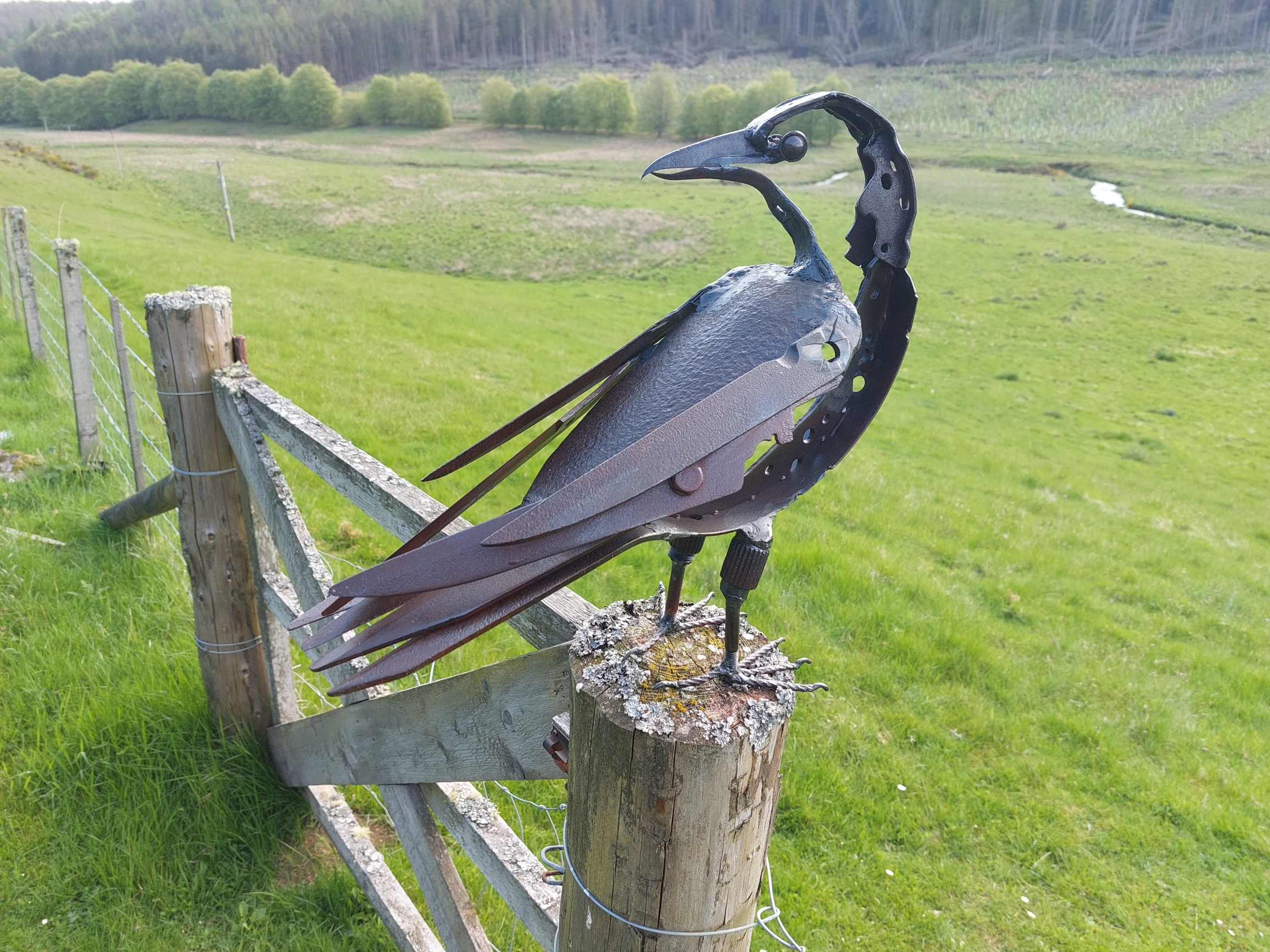
Helen graduated from Gray’s School of Art in Aberdeen in 1977 and has since developed a distinctive sculptural language which fuses the mechanical and natural world and expresses her life-long interest in animals, ecology and the environment. Fundamental to her practice is an understanding of form, underpinned by meticulous observation and draughtsmanship. Sculptures often begin on paper, sometimes on enormous sheets pinned to the studio wall, where life-sized forms in metal gradually emerge. This close study of anatomy, structure and movement provides the foundation for her work, and also enables her to recognise in an instant a piece of metal that will create the wing of a crow or the curve of a cow’s belly.
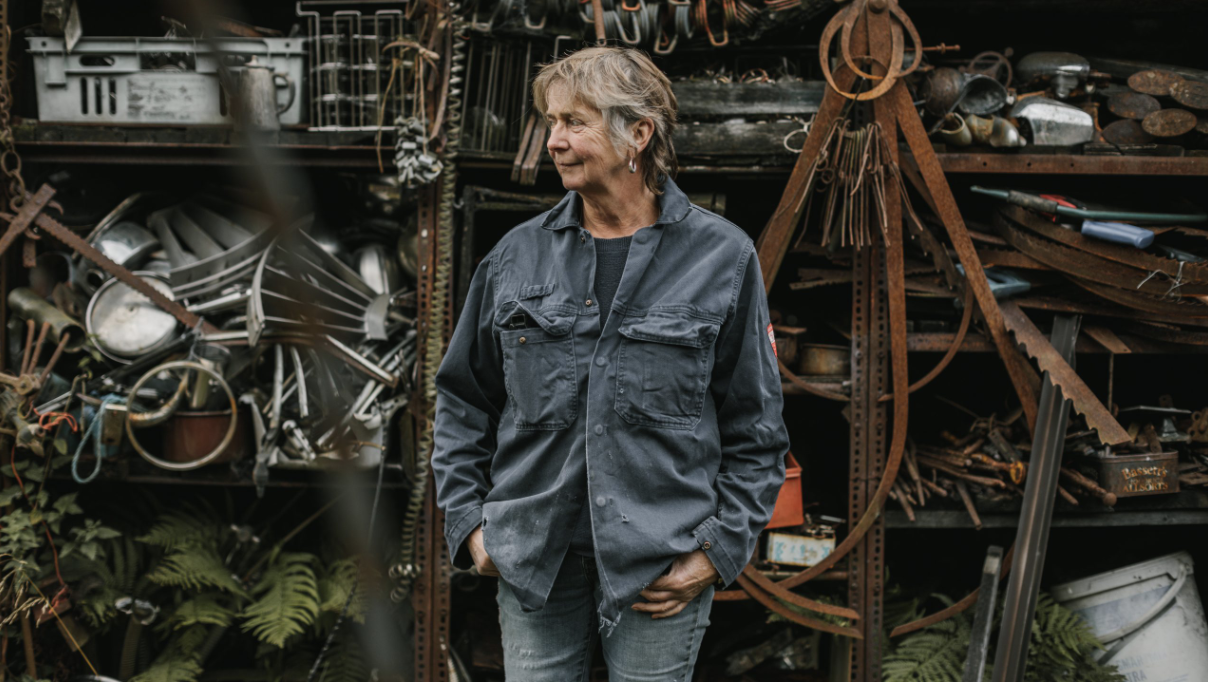
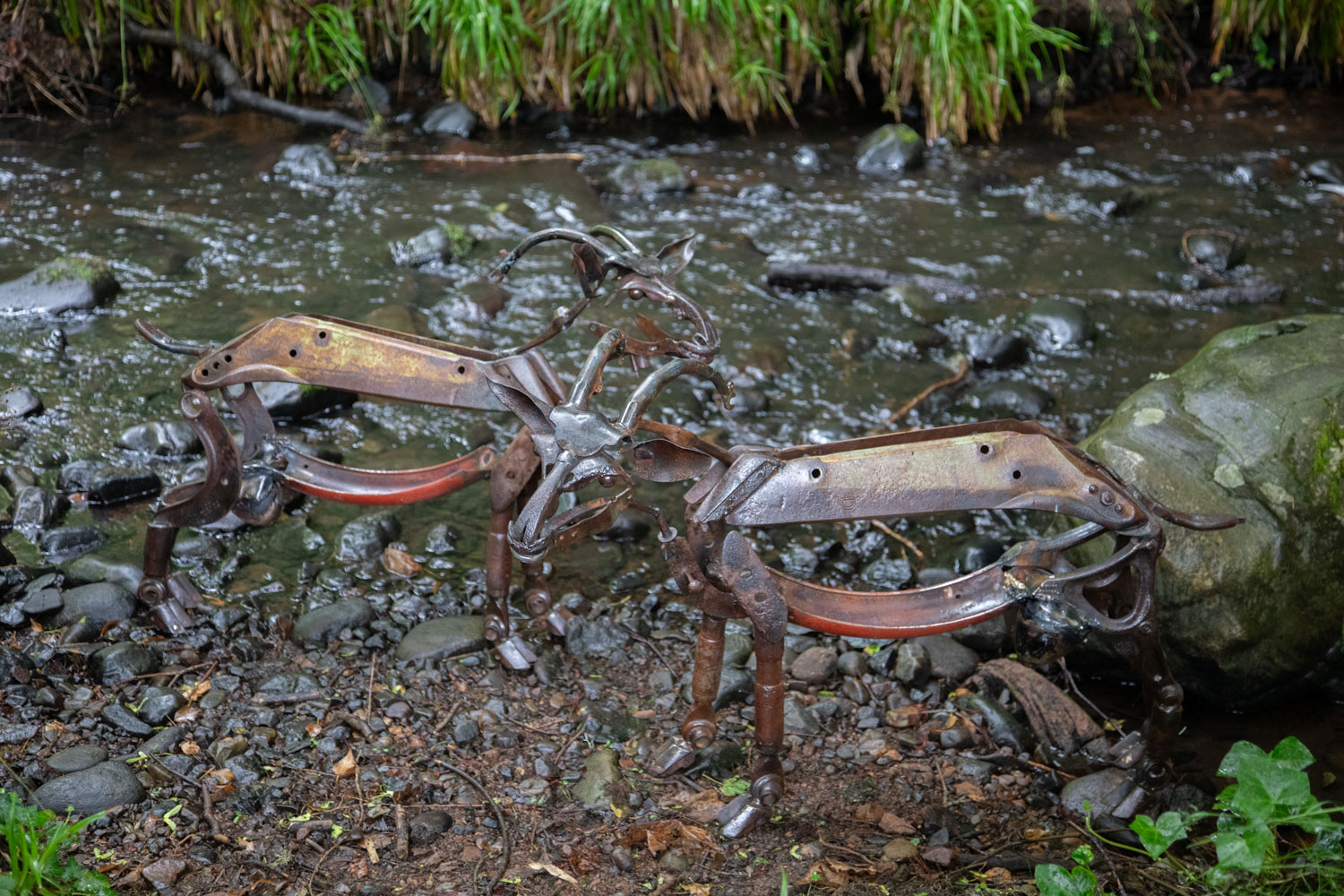
Helen’s sculptures reflect a poetic observation of the interconnectedness of all life and she regularly works and collaborates with other like minded artists, poets and academics. Fascinated by the role of negative space, and re-describing it within her work as ‘positive space’, her sculptures over recent decades have become as much about the spaces between the pieces of metal as the metal itself. These are the gaps and openings within a sculpture that allow the imagination to complete what the eye cannot see, and that engage the viewer to see beyond the sculpture as a singlular object in space. As she puts it, this phenomenon is ‘as interesting as the metal itself, the eye seeing muscle and mass when there is only air’. It is an absence that creates a presence, and one which makes Helen’s work all the more compelling.
Please contact us for further details of available works and for details about the Private View